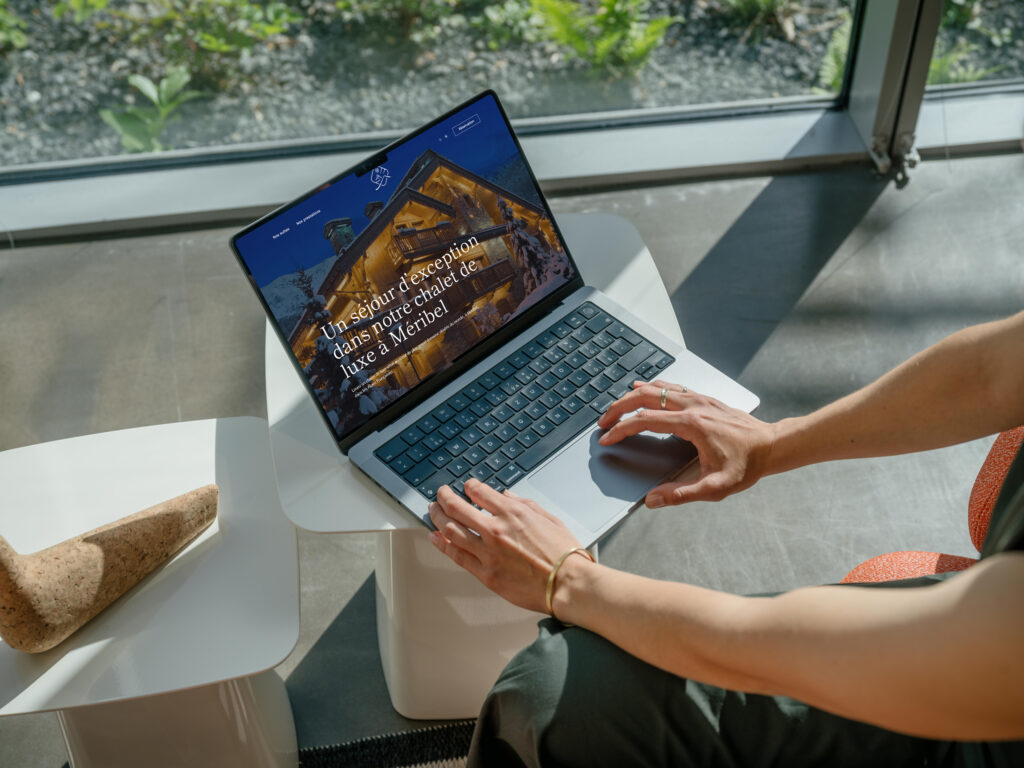
Created in 2003, WordPress is now the The most used CMS in the world. From personal blogs to major company websites, it has established itself as an unmissable benchmark. But behind its reputation as an accessible solution lies a real question: why will WordPress remain the best choice for creating a professional website in 2026, and what makes the difference between an average website and one that truly generates clients?
In almost ten years of designing WordPress sites for clients as varied as GoPro, Bustronome, and freelancers, I've seen what separates a successful project from a website lying dormant in a corner of the web. Here is my feedback, backed by figures.
WordPress by numbers: why it still dominates the web in 2026
Before discussing my experience, let's look at the facts. The 2026 figures confirm an undeniable dominance:
- 43 % across all websites of the planet run on WordPress, which is over 590 million active sites.
- Nearly 60% market share among websites using a CMS, far ahead of Shopify, Wix and Squarespace.
- Over 60,000 free plugins available, with approximately 1,500 premium extensions also included.
- Over 14,000 free themes to start from a base suited to your sector.
- WooCommerce, the e-commerce extension for WordPress, powers around 36 % online shops in the world.
However, one figure is particularly noteworthy: 97% of WordPress security vulnerabilities stem from plugins and themes, not the software itself. In other words, WordPress's power comes from its flexibility, but this same flexibility requires informed technical choices. This is precisely where professional support makes perfect sense.
Is WordPress really right for your project?
Before you go any further, ask yourself the real question. In 30 seconds, this quick test will give you a personalised answer according to your situation:
Is WordPress right for your project?
5 questions, 30 seconds. Personalised answer at the end.
1. What type of website do you want?
2. Would you like to be able to edit your site yourself?
Is Google search engine optimisation a challenge?
4. Do you plan to develop the site over time?
5. Are you looking for a sustainable solution that you can adapt without having to start from scratch?
A completely bespoke design
Flexibility that few platforms offer
Unlike all-in-one solutions like Wix or Squarespace, WordPress doesn’t trap your site in a rigid framework. Whether you need an e-commerce site, a showcase site, or a booking platform, everything is possible and customisable down to the smallest detail.
This is precisely where the support of a professional makes all the difference. A theme purchased from a marketplace gives you a starting point, but it's the design work, the adaptation to your brand guidelines, and the optimisation that transform a generic template into a website that reflects you and converts.
Features tailored to your business
WordPress has an immense catalogue of plugins: online booking, secure payment, contact forms, member areas, multilingual... But multiplying plugins without a method is the surest way to slow down and weaken a site. The real challenge isn't installing a lot, but choosing the right ones and configuring them properly.
A platform you keep in hand
An interface designed for autonomy
One of WordPress's great advantages is that once the site is delivered, you are not beholden to your provider. The administration interface is ergonomic and intuitive: changing text, adding a page, or publishing an article requires no technical skills.
In all my projects, I train my clients to take charge of their website. The objective is simple: that you are independent on a day-to-day basis, whilst knowing that I remain available for more complex developments.
Simplified media management
Add or replace an image, embed a video, update a visual: everything is done in a few clicks from the media library. Your site lives with your business, without relying on anyone for the slightest modification.
WordPress et le référencement naturel
A technical foundation designed for SEO
WordPress was designed with an SEO-friendly structure: clean URLs, fine-grained tag management, and compatibility with SEO best practices. It's no coincidence that Yoast, the leading SEO plugin, surpasses 10 million installations. This is one of the reasons why WordPress remains the preferred CMS for websites that want to be visible on Google.
But be careful: having a good foundation isn't enough. A poorly optimised, slow, or badly structured WordPress site won't rank any better than another. Technical performance, loading speed, and content quality make all the difference; it's a job in itself.
Quality content, the real driver of visibility
Search engine optimisation relies as much on technical aspects as it does on content. Extensions like Yoast or RankMath can guide you, but they don't replace a well-thought-out editorial strategy: targeting the right keywords, structuring your pages, answering the real questions of your potential customers.
So, should you create your website with WordPress?
Yes, without hesitation, WordPress will remain one of the most powerful, flexible and long-lasting solutions for creating a professional website in 2026. But like any tool, its value depends on how it's used. A well-designed, fast, SEO-optimised, and conversion-focused WordPress site is a genuine growth lever for your business.
This is precisely what I design for my clients: bespoke websites that are not only aesthetically pleasing but also transform your visitors into customers.
Do you have a project to create or redesign a website? Discover my approach and let's talk about your project., the first exchange is free and without obligation.
Data sources 2026: W3Techs, BuiltWith, HTTP Archive Web Almanac. Figures recorded in the first half of 2026.